


Top Tips for a Smooth Recovery After Laparoscopic Abdominal Surgery

Laparoscopic abdominal surgery, often called “keyhole surgery,” is a minimally invasive procedure that usually leads to faster recovery, less pain, and smaller scars compared to traditional open surgery. However, recovery still requires care, patience, and a bit of planning.
If you’re preparing for or recovering from laparoscopic abdominal surgery, here are some essential recovery tips to help you heal comfortably and avoid complications.
1. Follow Your Surgeon’s Instructions Carefully
After surgery, your doctor will provide post-operative care instructions tailored to your specific condition. These may include:
- When to remove wound dressings
- How to care for your incision sites
- Which medications to take
- When to resume normal activities
Tip: Don’t hesitate to call your care team if you have questions or something doesn’t feel right.
2. Manage Pain the Right Way
Some discomfort or bloating after laparoscopic surgery is normal, especially from the gas used during the procedure. You may also feel sore around the incision areas.
- Use pain medications as prescribed
- Apply a warm (not hot) compress for mild discomfort (with your doctor’s approval)
- Stay ahead of the pain – don’t wait until it gets severe
Avoid over-the-counter medications without checking with your doctor first.
3. Keep Moving – But Gently
Rest is important, but gentle movement can help reduce your risk of complications like blood clots or constipation.
- Take short walks around the house
- Avoid heavy lifting or strenuous activity for at least 6-weeks (or as advised)
- Gradually increase your activity level each day
Listen to your body if something causes pain, stop and rest.

4. Eat a Light, Nutritious Diet
After abdominal surgery, your digestive system may take time to return to normal. Start with light, easy-to-digest meals, such as:
- Broths and soups
- Soft fruits and cooked vegetables
- Toast or crackers
- Yogurt or plain rice
Stay hydrated by drinking plenty of water and avoiding alcohol, caffeine, and carbonated drinks for a few days.

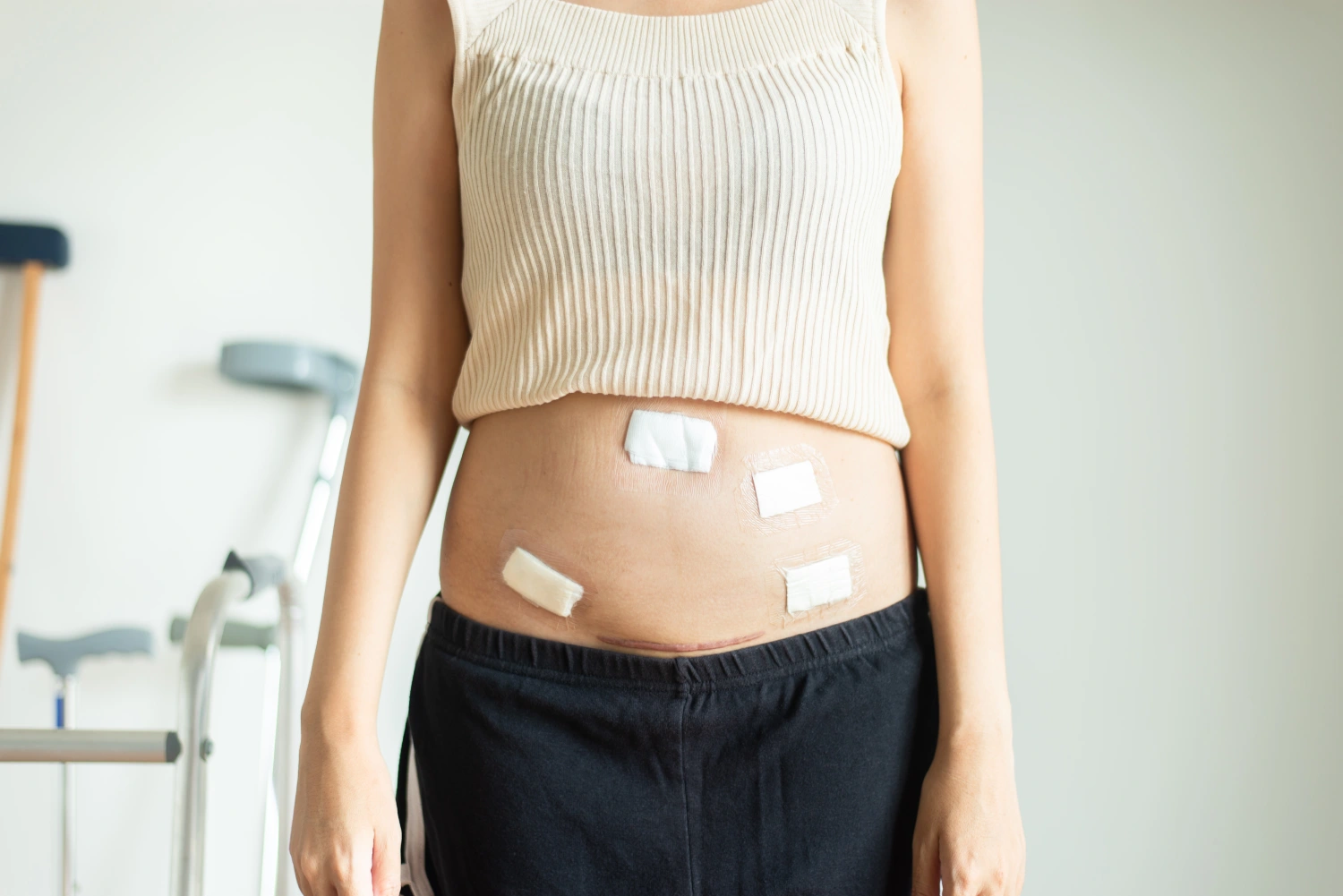
5. Care for Your Incision Sites
Even though laparoscopic incisions are small, they still need proper care:
- Keep them clean and dry
- Avoid soaking in a bath or swimming until fully healed
- Watch for signs of infection (redness, swelling, pus, or fever)
Wear loose, comfortable clothing to avoid irritating the area.
6. Watch for Warning Signs
Call your healthcare provider immediately if you notice:
- Fever over 100.4°F (38°C)
- Severe abdominal pain that doesn’t improve
- Heavy bleeding or discharge from incision sites
- Persistent nausea or vomiting
- Difficulty urinating or bowel changes
Catching complications early can prevent more serious problems.
7. Be Patient with Yourself
Even though laparoscopic surgery recovery is usually quicker, your body still needs time to heal. It’s normal to feel tired, emotional, or frustrated during the recovery process.
Tip: Set small goals, ask for help when needed, and give yourself credit for progress—no matter how small.
Final Thoughts: Recovery Is a Journey
Recovering from laparoscopic abdominal surgery is often smoother than traditional surgery, but it’s still important to take care of yourself. By following your doctor’s advice, staying active, eating well, and being alert to warning signs, you’ll be on the right path to healing.
If you have any concerns during recovery, don’t delay, reach out to Dr Sherif.
About Dr Sherif Awad
Dr Sherif is a leading experienced Consultant General, Laparoscopic, Upper Gastrointestinal and Weight Loss Surgeon based at Emirates Speciality Hospital (Healthcare City).