


Understanding Gallstones: Types, Causes, and Risk Factors in the UAE Population
Quick Summary:
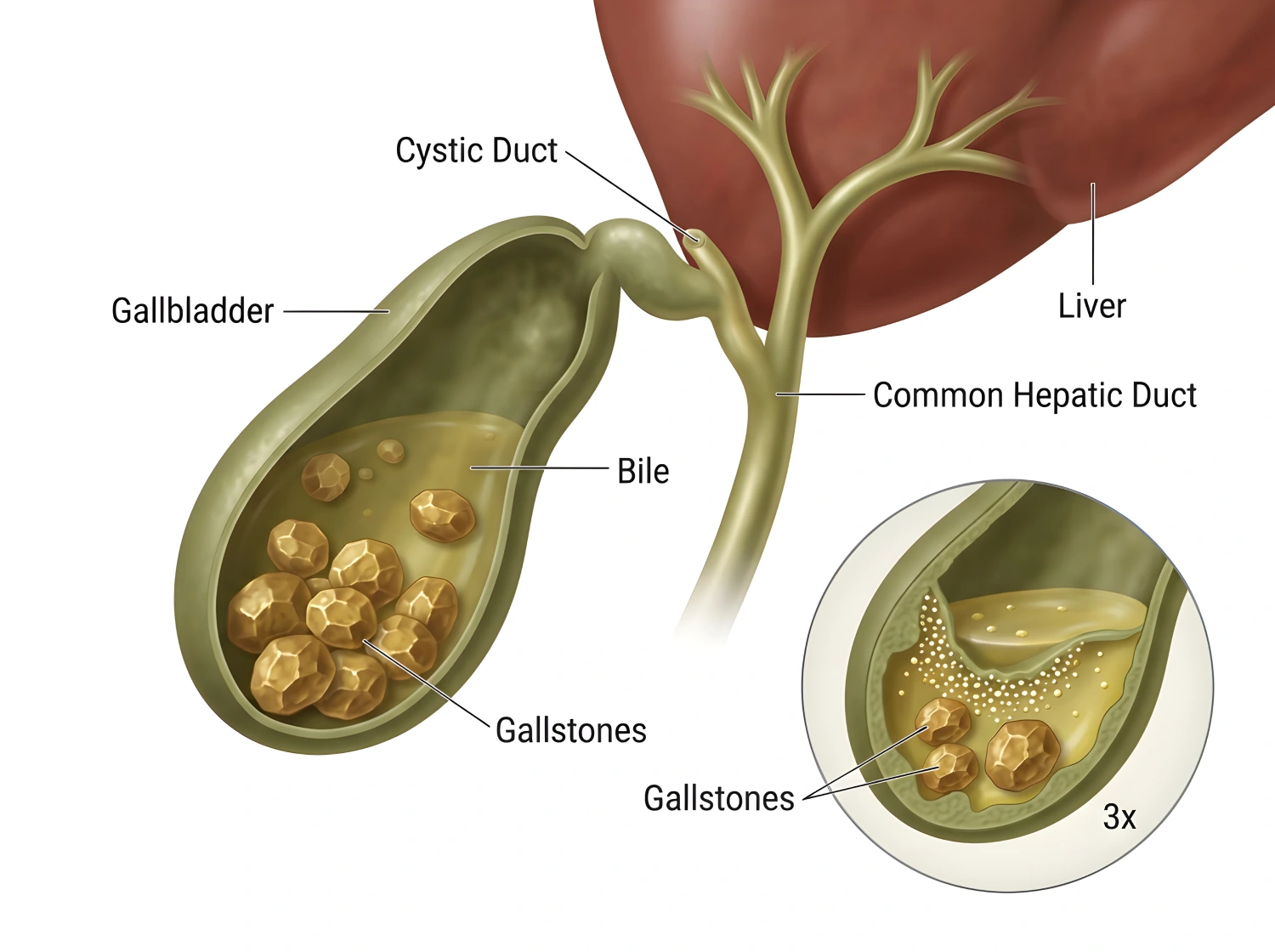
Gallstones are hardened deposits that form in the gallbladder, and they come in two main types: cholesterol stones (the most common, linked to diet and obesity) and pigment stones (linked to blood disorders and liver conditions). In the UAE, high rates of obesity, sedentary lifestyles, a diet rich in refined carbohydrates and fats, and a diverse expatriate population with varying genetic predispositions all contribute to gallstones being one of the most common reasons for abdominal surgery in the region.
Why Gallstones Are So Common in the UAE
Gallstones are among the most frequent reasons patients see a general surgeon in Dubai. The UAE’s population profile plays a significant role: high rates of obesity and metabolic syndrome, a diet that has shifted toward processed and high-fat foods, and a largely sedentary, air-conditioned indoor lifestyle all create ideal conditions for stone formation.
Because the UAE is home to a highly diverse expatriate community, genetic predisposition also varies widely. Some ethnic groups, including South Asian and Filipino populations, carry a naturally higher lifetime risk of gallstone disease, which compounds with local lifestyle factors. For a broader overview of diagnosis and treatment options, see our complete guide to gallstones and surgery.
The Two Main Types of Gallstones
Not all gallstones are the same, and understanding the type can help explain why they formed. If you are interested in the biology behind this, we explain the pathophysiology of gallstone formation in more detail.
- Cholesterol stones – account for roughly 80% of cases. They form when bile contains too much cholesterol relative to bile salts, causing it to crystallize. These are strongly linked to obesity, high-fat diets, rapid weight loss, and elevated cholesterol.
- Pigment stones – made mostly of bilirubin. They are more common in patients with liver cirrhosis, chronic hemolytic conditions (such as sickle cell disease or thalassemia), or biliary tract infections.
Key Risk Factors for UAE Residents
Several factors are particularly relevant to patients living in the UAE:
- Obesity and high BMI – a major driver of cholesterol stone formation, and a well-documented public health concern in the region.
- Rapid weight loss – crash diets, GLP-1 use (such as Mounjaro injections), and even bariatric surgery without gallbladder precautions, can paradoxically increase gallstone risk in the months that follow.
- Sedentary lifestyle – long working hours indoors and low physical activity slow gallbladder emptying.
- Diet high in refined carbohydrates and saturated fat – common in fast-food-heavy diets.
- Family history and ethnicity – genetic predisposition varies significantly across the UAE’s multicultural population.
- Pregnancy and hormone therapy – estrogen increases cholesterol saturation in bile.
- Age and gender – women, and adults over 40, carry a higher baseline risk.
How This Affects Your Treatment Decisions
The type of gallstone and the underlying cause rarely change the surgical approach – laparoscopic cholecystectomy remains the definitive treatment for symptomatic gallstones – but they do inform how a surgeon assesses your overall risk, discusses prevention, and screens for related conditions such as fatty liver disease or metabolic syndrome. You can read more about what the procedure involves on our page for Gallbladder and Gallstone Surgery in Dubai.
If you carry several of the risk factors above and have experienced upper abdominal pain, bloating, or discomfort after fatty meals, it’s worth having an ultrasound assessment before symptoms progress to complications such as acute cholecystitis or gallstone pancreatitis. Our guide to gallstone symptoms and when to see a doctor explains which warning signs should not be ignored.
Frequently Asked Questions
Can I have gallstones without any symptoms?
Yes. Many gallstones are ‘silent’ and are discovered incidentally on a scan done for another reason. Silent gallstones don’t always need surgery, but they should be monitored, especially if risk factors are present.
Does diet alone cause gallstones?
Diet is a major contributing factor, particularly for cholesterol stones, but genetics, body weight, hormones, and certain medical conditions also play a significant role. Most cases result from a combination of factors rather than diet alone.
Are gallstones more common in expatriates living in the UAE?
Risk varies by ethnic background and lifestyle rather than expatriate status itself. However, the shift toward a Western-style diet and reduced physical activity after relocating to the UAE can increase risk over time.
Can losing weight quickly cause gallstones?
Yes. Rapid weight loss, whether from crash dieting, GLP-1 use or bariatric surgery, increases cholesterol concentration in bile and is a recognized trigger for new gallstone formation.
How is the type of gallstone diagnosed?
An abdominal ultrasound identifies the presence of gallstones very reliably, though it doesn’t always distinguish cholesterol from pigment stones. Blood tests and patient history usually clarify the likely type and underlying cause.
Book Your Consultation Today!
Concerned about gallstones or experiencing pain after meals? Don’t wait for a complication. Book your consultation with Dr. Sherif Awad and get a clear diagnosis today.
Take control of your digestive health. Book your consultation with Dr Sherif Awad!
Medical Disclaimer
This content is for general informational purposes and does not replace personalized medical advice. Readers should consult Dr Sherif Awad or another qualified specialist for diagnosis and treatment tailored to their individual condition. For a personalised assessment, call +971 50 181 9783 or book a consultation with Dr Sherif Awad.
About Dr Sherif Awad
Dr Sherif is a leading experienced Consultant General, Laparoscopic, Upper Gastrointestinal and Weight Loss Surgeon based at Emirates Speciality Hospital (Healthcare City). Learn more About Dr Sherif Awad.