


Hiatal Hernia Causes Explained: Risk Factors for UAE Residents
Quick Summary:
Hiatal hernia risk in the UAE is shaped by a combination of factors: high rates of obesity and metabolic syndrome, occupations involving heavy manual lifting, an ageing population of long-term residents and retirees, pregnancy-related abdominal pressure changes, and chronic straining from untreated constipation. While age and genetics can’t be changed, several of the most significant UAE-specific risk factors – weight, lifting technique, and chronic coughing or straining – are modifiable with targeted lifestyle intervention.
Obesity and Metabolic Syndrome
The UAE has one of the higher regional rates of obesity, and excess abdominal weight is one of the most consistent risk factors for hiatal hernia. Increased intra-abdominal pressure from central obesity pushes against the diaphragm at the exact point where the esophagus passes through it, gradually weakening the surrounding muscle and connective tissue over time. For a wider look at how excess weight affects overall health, see Obesity and Your Health.
Occupational and Lifestyle Factors
- Heavy manual labor – repeated heavy lifting, common in the UAE’s large construction and logistics workforce, increases intra-abdominal pressure repeatedly over years.
- Chronic straining from constipation – a low-fibre, fast-food-influenced diet common across the region contributes to straining, which raises abdominal pressure with each bowel movement.
- Chronic coughing – smoking-related or environmental (dust, air quality) chronic cough repeatedly stresses the diaphragm.
- Sedentary indoor lifestyle – paradoxically, low activity contributes to the weight gain that itself raises risk.
Age and Population Demographics
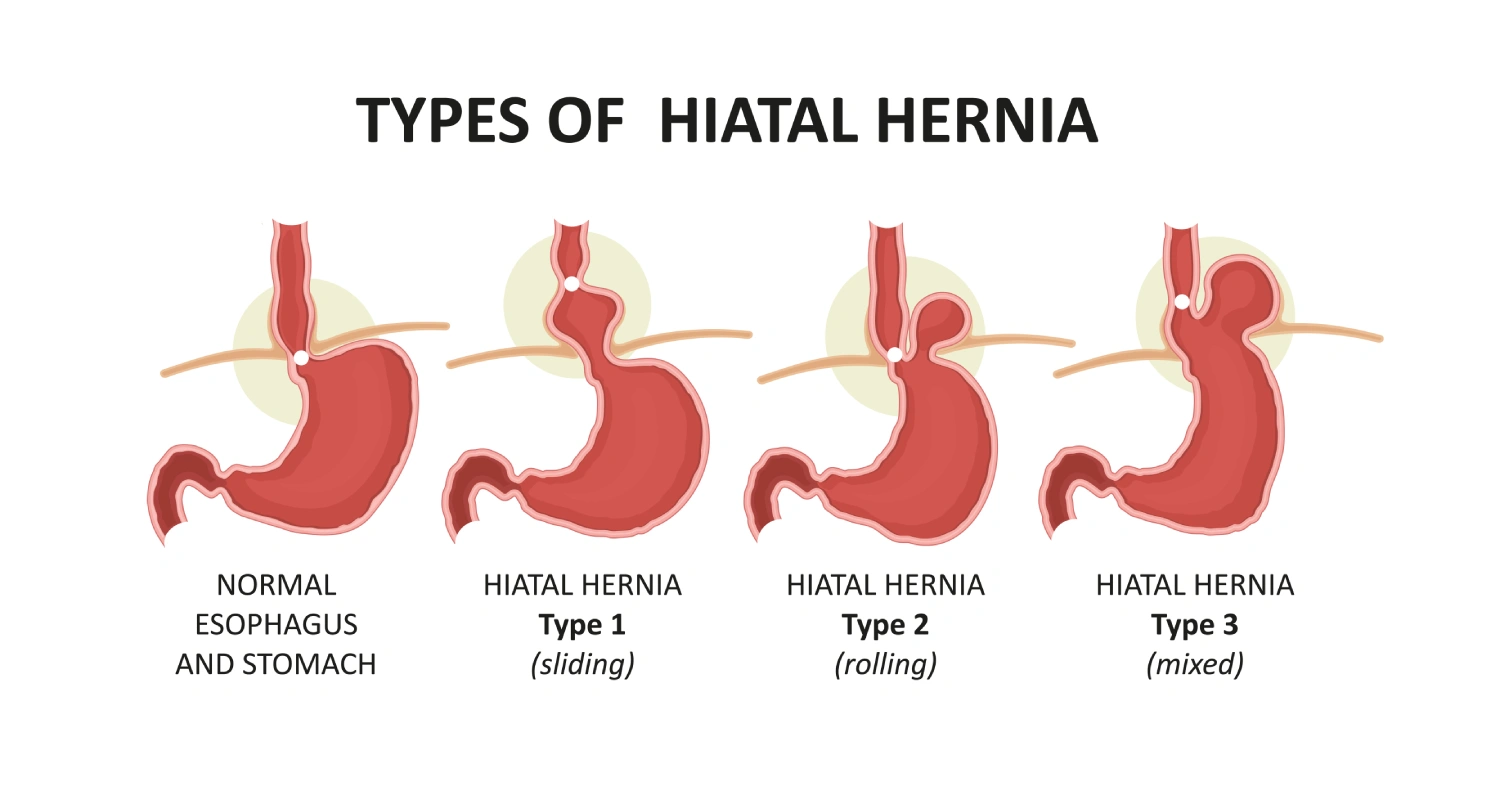
The connective tissue and muscle around the diaphragm naturally weaken with age, which is why hiatal hernia becomes more common in patients over 50. The UAE’s growing population of long-term expatriate residents and retirees means this age-related risk is increasingly relevant to local surgical practice, alongside the younger, working-age population more affected by occupational and lifestyle risk factors.
Pregnancy and Abdominal Pressure
Pregnancy significantly raises intra-abdominal pressure, particularly in the third trimester, and multiple pregnancies compound this effect over time on the tissues supporting the diaphragm and esophageal opening.
What UAE Residents Can Realistically Do
- Maintain a healthy body weight through sustainable diet and activity changes, seeking medical support for weight management – including Weight Loss Surgery – where needed.
- Use proper lifting technique at work, and where relevant, request occupational health guidance if manual lifting is part of your role.
- Manage constipation proactively with adequate fibre, hydration, and movement rather than habitual straining.
- Address chronic cough – whether from smoking, allergies, or reflux itself – with your doctor rather than tolerating it long-term.
- Seek assessment for persistent reflux or chest symptoms rather than assuming they’re unrelated to a structural cause. Understanding the connection between hiatal hernia and GERD can help you judge when reflux needs further investigation.
Frequently Asked Questions
Is hiatal hernia more common in the UAE than elsewhere?
There’s no strong evidence the underlying rate differs dramatically from global figures, but several regional risk factors – obesity prevalence, occupational lifting, and dietary patterns – mean local surgeons see it frequently in practice.
Can losing weight reduce my risk of hiatal hernia?
Yes, reducing central abdominal weight lowers the ongoing pressure on the diaphragm and is one of the most effective modifiable risk-reduction steps available.
Does heavy lifting at work definitely cause a hiatal hernia?
Not on its own for most people, but repeated heavy lifting over years, especially without proper technique, is a recognized contributing factor alongside other risks.
Can pregnancy cause a permanent hiatal hernia?
Pregnancy-related pressure changes can contribute to hernia development, and while some changes resolve after delivery, an established hernia typically does not resolve on its own and may need later assessment.
At what age does hiatal hernia risk increase most?
Risk rises noticeably from around age 50 onward as the diaphragm’s supporting tissue naturally weakens, though it can occur at any age given the right combination of risk factors.
Book Your Consultation Today!
Recognize some of these risk factors in your own lifestyle? Book your consultation with Dr. Sherif Awad for a personalized risk assessment and prevention plan. If a hiatal hernia has already been diagnosed, you can read more about Hiatus Hernia Surgery in Dubai.
Take a proactive step for your health. Book your consultation with Dr Sherif Awad!
Medical Disclaimer
This content is for general informational purposes and does not replace personalised medical advice. Readers should consult Dr Sherif Awad or another qualified specialist for diagnosis and treatment tailored to their individual condition. For a personalised assessment, call +971 50 181 9783 or book a consultation with Dr Sherif Awad.
About Dr Sherif Awad
Dr Sherif Awad is a leading experienced Consultant General, Laparoscopic, Upper Gastrointestinal and Weight Loss Surgeon based at Emirates Speciality Hospital (Healthcare City).