


The Science Behind Hiatal Hernia: What Weakens the Diaphragm and Causes Hernias
Quick Summary:
A hiatal hernia forms when the diaphragmatic hiatus – the natural opening in the diaphragm through which the esophagus passes into the abdomen – widens beyond its normal size, and the phrenoesophageal ligament that anchors the stomach in place stretches or weakens. This allows part of the stomach to move upward into the chest. The underlying cause is a combination of connective tissue changes (often age-related collagen weakening) and repeated or sustained increases in intra-abdominal pressure, which together compromise the structural integrity of this small but critical anatomical junction.
The Anatomy That Normally Keeps Things in Place
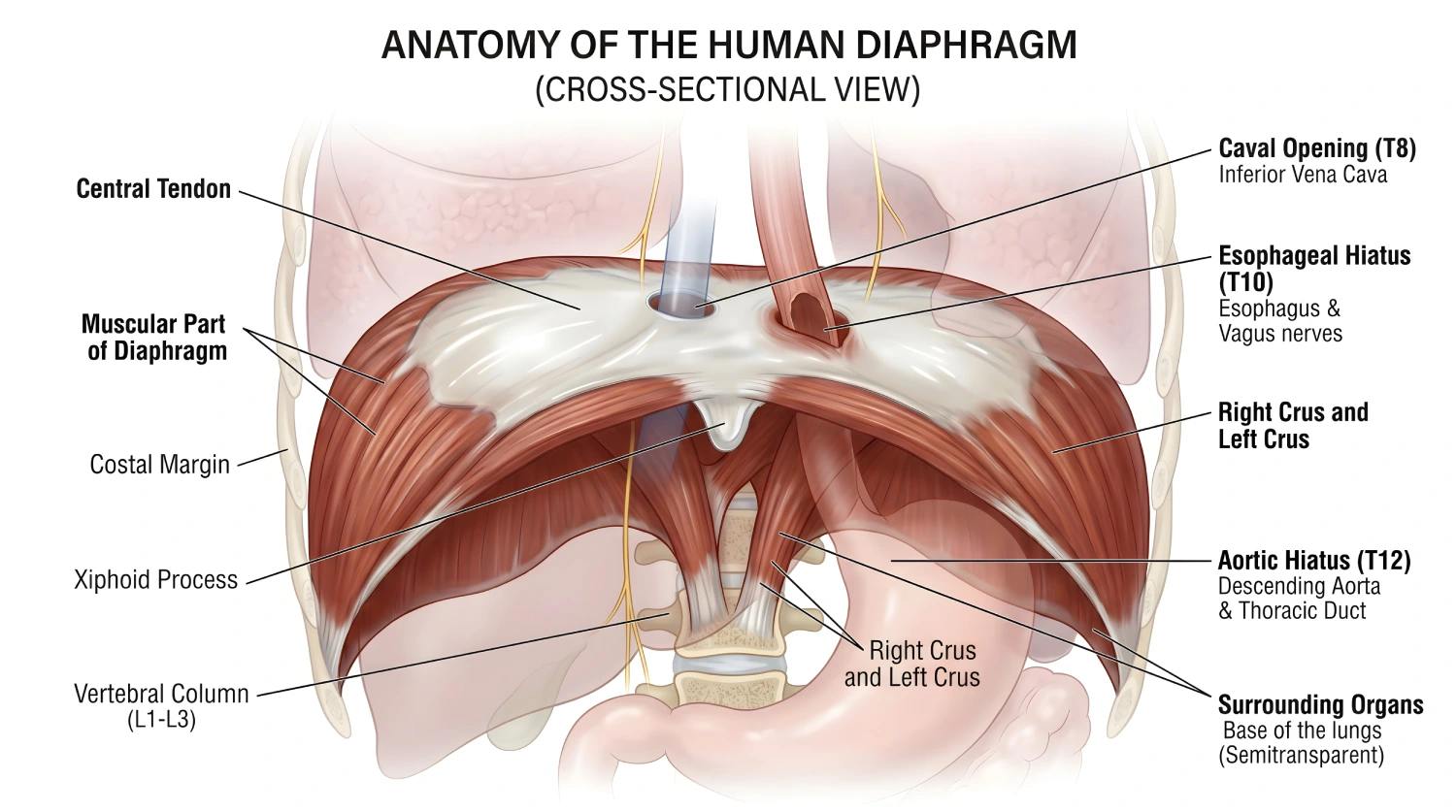
The diaphragm is a dome-shaped muscle separating the chest and abdominal cavities, with a small natural opening – the esophageal hiatus – that allows the esophagus to pass through and connect to the stomach below. This opening is reinforced by the phrenoesophageal ligament, a band of connective tissue that anchors the lower esophagus and upper stomach securely in the abdomen, while still allowing the flexibility needed for swallowing and breathing.
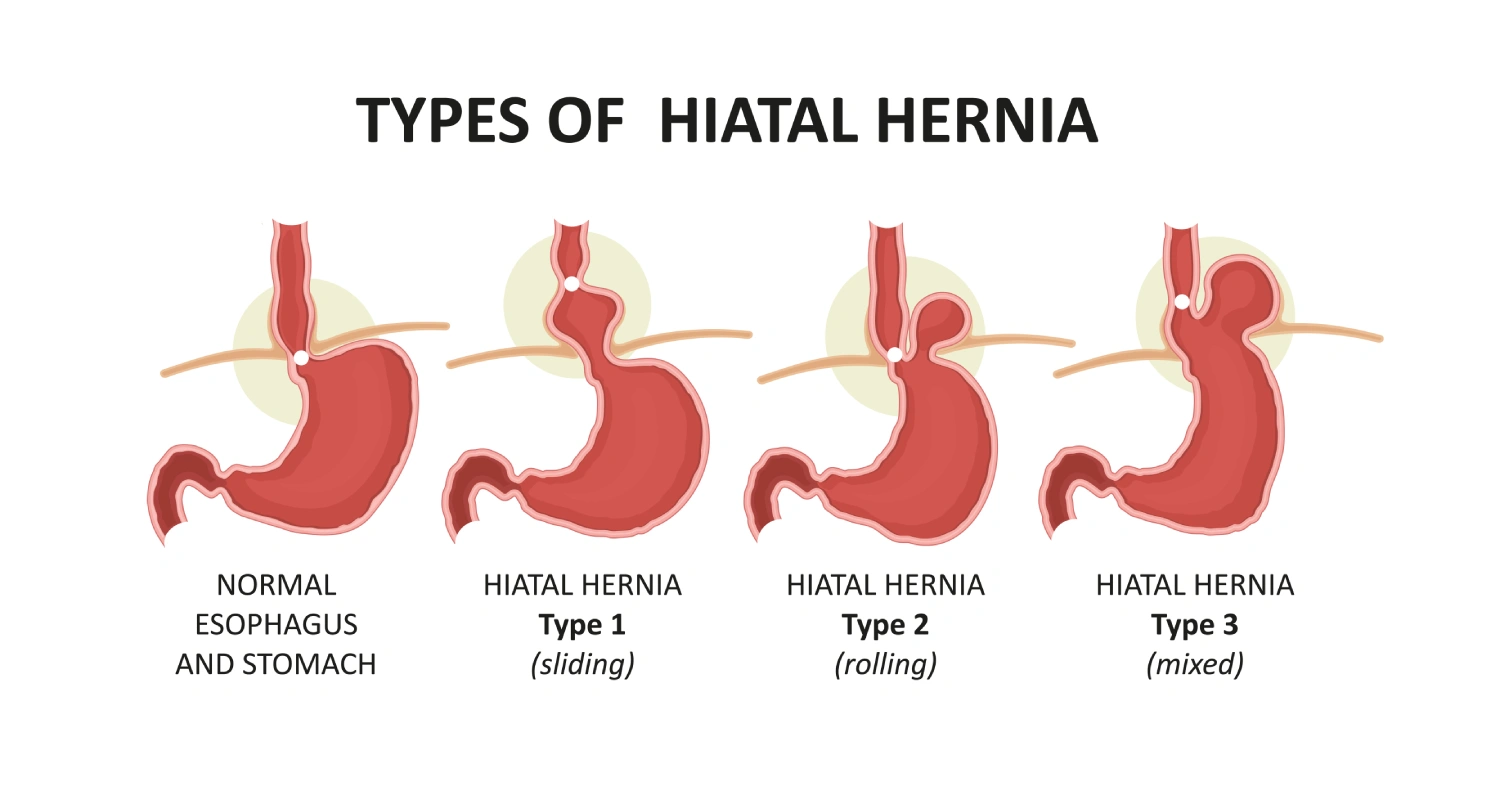
In healthy anatomy, this ligament and the surrounding muscle fibres of the diaphragmatic crura hold everything firmly in position, even under normal daily pressure changes from breathing, coughing, or bending. Where and how this anchoring fails is what determines the four types of hiatal hernia, each of which behaves and is treated differently.
What Actually Weakens This Structure
- Connective tissue and collagen changes – as with other forms of tissue laxity, ageing gradually reduces the strength and elasticity of the phrenoesophageal ligament and surrounding fascia.
- Chronic increases in intra-abdominal pressure – repeated strain from obesity, pregnancy, heavy lifting, or persistent coughing places sustained mechanical stress on this ligament over months and years.
- Widening of the diaphragmatic hiatus – the muscular opening itself can gradually enlarge beyond its normal diameter, reducing the snug fit that normally prevents the stomach from slipping through.
- Loss of the normal angle of entry – as the junction migrates upward, the natural valve mechanism at the base of the esophagus (partly maintained by this angle) becomes less effective, which is part of why hiatal hernia and reflux are so closely linked, a relationship we explain in more detail in the connection between hiatal hernia and GERD.
Why This Explains the Progression of Symptoms
Because the underlying problem is mechanical – a stretched ligament and a widened opening – hiatal hernias tend to be progressive rather than static. Once the phrenoesophageal ligament has stretched significantly, it does not regain its original strength on its own, which is why small hernias can gradually enlarge over years, and why lifestyle changes alone can manage symptoms but cannot reverse the structural defect itself.
Why Surgical Repair Targets This Specific Anatomy
Understanding this mechanism explains the logic behind surgical repair: an operation for hiatal hernia isn’t simply about pushing the stomach back into the abdomen, it’s about narrowing the widened diaphragmatic opening (crural repair) and, often, reinforcing or recreating the anti-reflux mechanism at the gastro-esophageal junction (fundoplication). Addressing the actual structural weakness – rather than only the displaced organ – is why properly performed surgical repair offers a more durable solution than repeated symptom management alone. For a step-by-step explanation of how the operation is planned and performed, see our complete guide to hiatus hernia repair surgery, or read more about Hiatus Hernia Surgery in Dubai with Dr Sherif Awad.
Frequently Asked Questions
Can a hiatal hernia be caused by a single event, like heavy lifting once?
It’s uncommon for a single event to cause a hernia in otherwise healthy tissue; more typically, repeated pressure over months or years gradually weakens the phrenoesophageal ligament until herniation occurs. A single strenuous event can, however, be the trigger that brings an already-weakened area to the point of noticeable herniation.
Does the diaphragm opening get smaller again after treatment?
Not on its own. Surgical repair narrows the opening mechanically using sutures (and often mesh reinforcement for larger defects), since the tissue does not naturally regain its original tightness once significantly stretched.
Why do hiatal hernias tend to get bigger over time?
Because the underlying support (the phrenoesophageal ligament and diaphragmatic crura) is already weakened, ongoing everyday pressure from breathing, coughing, or straining continues to act on a structure that can no longer resist it as effectively, allowing gradual enlargement.
Is collagen weakness the same reason some people get hernias elsewhere in the body?
Can exercises strengthen the diaphragm enough to prevent a hiatal hernia?
General core and breathing exercises support overall abdominal wall health, but there’s no exercise that specifically strengthens the phrenoesophageal ligament itself once it has weakened significantly.
Book Your Consultation Today!
Now that you understand what causes hiatal hernia, find out what it means for you. Book your consultation with Dr. Sherif Awad for a thorough, personalized evaluation.
Get clarity on your condition. Book your consultation with Dr Sherif Awad!
Medical Disclaimer
This content is for general informational purposes and does not replace personalised medical advice. Readers should consult Dr Sherif Awad or another qualified specialist for diagnosis and treatment tailored to their individual condition. For a personalised assessment, call +971 50 181 9783 or book a consultation with Dr Sherif Awad.
About Dr Sherif Awad
Dr Sherif Awad is a leading experienced Consultant General, Laparoscopic, Upper Gastrointestinal and Weight Loss Surgeon based at Emirates Speciality Hospital (Healthcare City).