


The Four Types of Hiatal Hernia: Complete Classification Guide
Quick Summary:
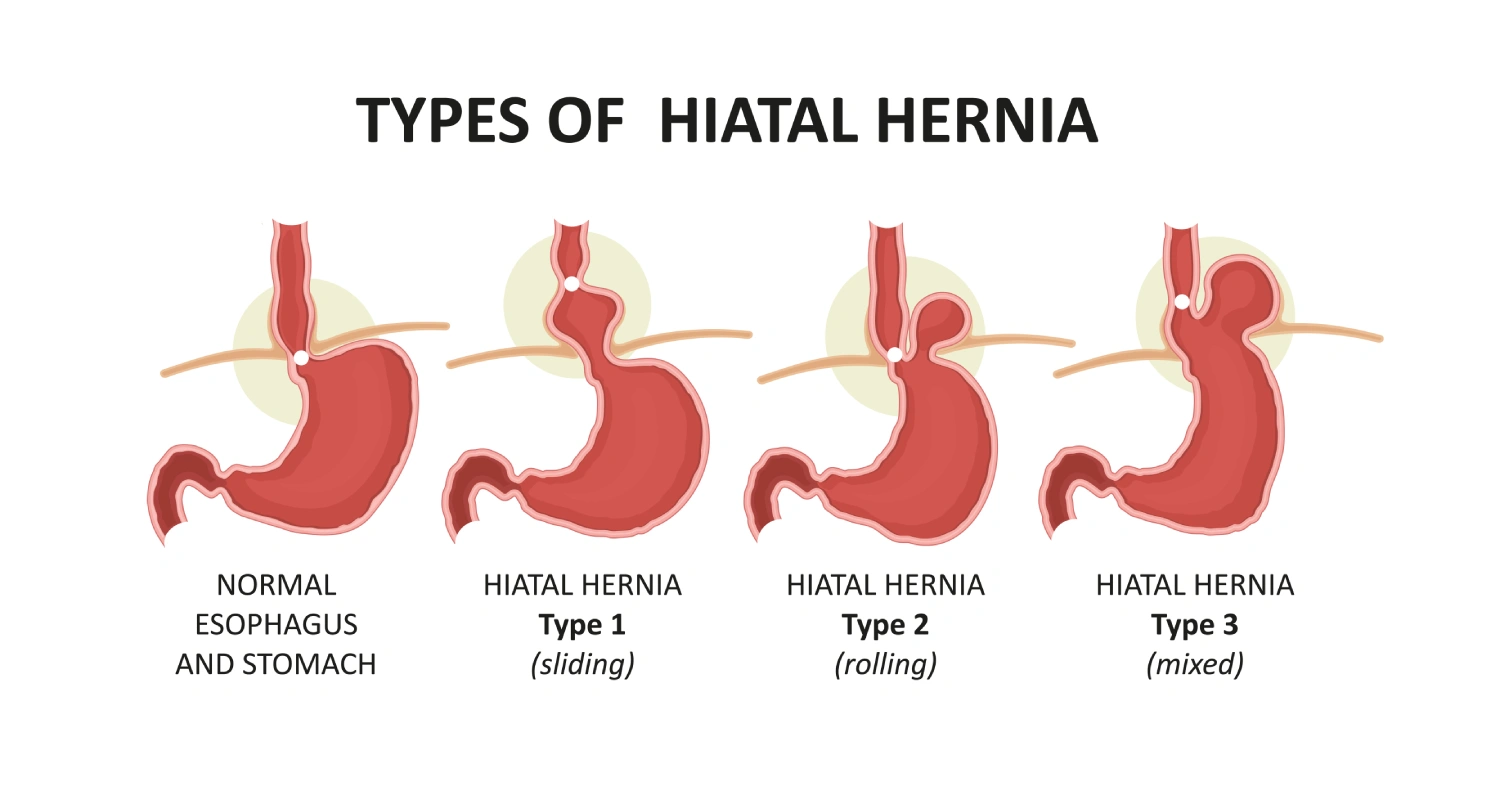
Hiatal hernias are classified into four types based on how the stomach moves through the diaphragm. Type I (sliding) is the most common and least severe, accounting for around 95% of cases. Types II, III, and IV are collectively known as paraesophageal hernias, where part or all of the stomach – and sometimes other organs – herniate alongside the esophagus into the chest. Type IV is the most complex, involving additional organs such as the colon or spleen. The type significantly influences symptoms, urgency, and surgical approach.
Type I: Sliding Hiatal Hernia
This is by far the most common type, making up roughly 19 out of 20 hiatal hernia diagnoses. Here, the junction between the esophagus and stomach slides upward through the diaphragm into the chest, particularly when lying down or bending over, then often slides back into place. Read more about sliding hiatal hernia symptoms and treatment.
Type I hernias are the primary anatomical driver behind most cases of GERD, because the sliding motion weakens the natural anti-reflux barrier at the lower esophagus. Most Type I hernias are managed with lifestyle changes and medication first, with surgery reserved for those with persistent, severe, or complicated reflux. We explain the connection between hiatal hernia and GERD in more detail.
Type II: Pure Paraesophageal Hernia
In a Type II hernia, the gastro-oesophageal junction stays in its normal position, but a portion of the stomach herniates alongside it through a separate defect in the diaphragm. True ‘pure’ Type II hernias are relatively rare on their own – most paraesophageal hernias seen in practice are actually a mixed Type III.
Type III: Mixed Sliding and Paraesophageal Hernia
This is the most common type of paraesophageal hernia encountered in clinical practice, combining features of both Type I and Type II – both the junction and a portion of the stomach herniate into the chest. Type III hernias are more likely to cause mechanical symptoms such as chest discomfort, breathlessness, early fullness, and difficulty swallowing, in addition to reflux.
Type IV: Complex Hernia With Additional Organs
The most advanced classification, a Type IV hernia occurs when, in addition to the stomach, other abdominal organs – most commonly the colon, spleen, or small bowel – also herniate into the chest cavity. These are often described as ‘giant’ hiatal hernias and carry the highest risk of complications, including strangulation and obstruction, making timely surgical evaluation particularly important. Read more about Paraoesophageal and Giant Hiatal Hernia treatment.
Why the Type Matters for Treatment
Type I hernias are frequently managed conservatively unless reflux symptoms are severe or complicated. Types II through IV – the paraesophageal group – are generally considered for surgical repair more readily, even with milder symptoms, because of the structural risk of strangulation associated with a larger portion of the stomach sitting in the chest. An accurate classification, usually confirmed with a barium swallow study, CT scan, or endoscopy, is therefore one of the first and most important steps in planning appropriate treatment. If surgery is being considered, see our complete guide to hiatus hernia repair surgery.
Frequently Asked Questions
Which type of hiatal hernia is most common?
Type I, the sliding hiatal hernia, accounts for approximately 95% of all hiatal hernia diagnoses.
Which type of hiatal hernia is most dangerous?
Type IV, the most complex classification, carries the highest risk because it involves additional organs herniating into the chest alongside the stomach, increasing the risk of strangulation and obstruction.
Do all types of hiatal hernia cause GERD?
Type I is most strongly linked to GERD due to its effect on the reflux barrier. Types II to IV can cause reflux too, but more often present with mechanical symptoms like chest discomfort, fullness, or breathlessness.
How is the type of hiatal hernia diagnosed?
Typically through a combination of upper GI endoscopy, a barium swallow study, and sometimes a CT scan, which together show the position and extent of herniation.
Does every paraesophageal hernia (Types II–IV) need surgery?
Not automatically, but surgery is recommended more readily for these types, even with mild symptoms, because of the structural risks involved. Each case should be assessed individually by a specialist.
Book Your Consultation Today!
Not sure what type of hiatal hernia you have, or what it means for your treatment? Book your consultation with Dr. Sherif Awad for an accurate diagnosis and clear next steps. Learn more about Hiatus Hernia Surgery in Dubai.
Understand your diagnosis. Book your consultation with Dr Sherif Awad!
Medical Disclaimer
This content is for general informational purposes and does not replace personalised medical advice. Readers should consult Dr Sherif Awad or another qualified specialist for diagnosis and treatment tailored to their individual condition. For a personalised assessment, call +971 50 181 9783 or book a consultation with Dr Sherif Awad.
About Dr Sherif Awad
Dr Sherif is a leading experienced Consultant General, Laparoscopic, Upper Gastrointestinal and Weight Loss Surgeon based at Emirates Speciality Hospital (Healthcare City).