


Groin Hernia Symptoms: How to Recognize Inguinal and Femoral Hernias
Quick Summary:
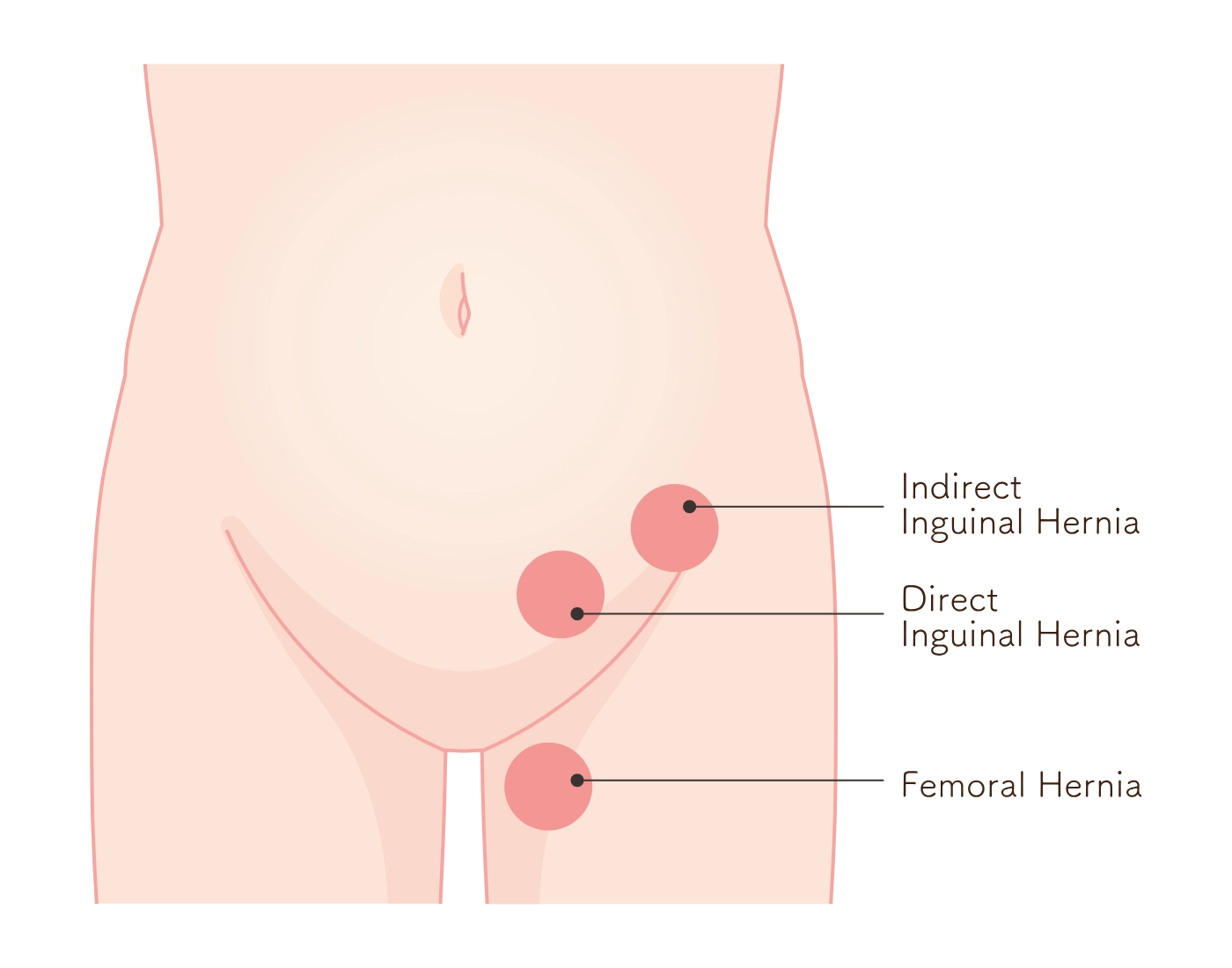
Inguinal hernias occur through the inguinal canal and are far more common, especially in men, typically causing a groin bulge that worsens with standing, coughing, or straining. Femoral hernias occur through a separate, narrower canal below the inguinal ligament, are more common in women, and carry a notably higher risk of strangulation despite often being smaller and less obvious. Recognizing the difference matters because femoral hernias are more likely to need urgent surgical attention even when symptoms seem mild.
Inguinal Hernia Symptoms
Inguinal hernias are by far the most common type of groin hernia, accounting for roughly 70% of all abdominal wall hernias, and occur far more frequently in men due to the anatomy of the inguinal canal.
- A visible or palpable bulge in the groin, sometimes extending into the scrotum in men.
- A bulge that becomes more prominent with standing, coughing, or straining, and often reduces (flattens) when lying down.
- A dull ache, heaviness, or dragging sensation in the groin, especially after physical activity.
- A burning or gurgling feeling at the site of the bulge.
- Symptoms that build gradually over weeks to months in most non-emergency cases.
Because these signs overlap with other groin problems, confirming the diagnosis comes first, and our guide to Groin Hernia Repair (Inguinal and Femoral) sets out how each type is treated. A bulge that reappears after a previous operation is a separate situation, with its own causes of recurrent inguinal hernia to assess.
Femoral Hernia Symptoms
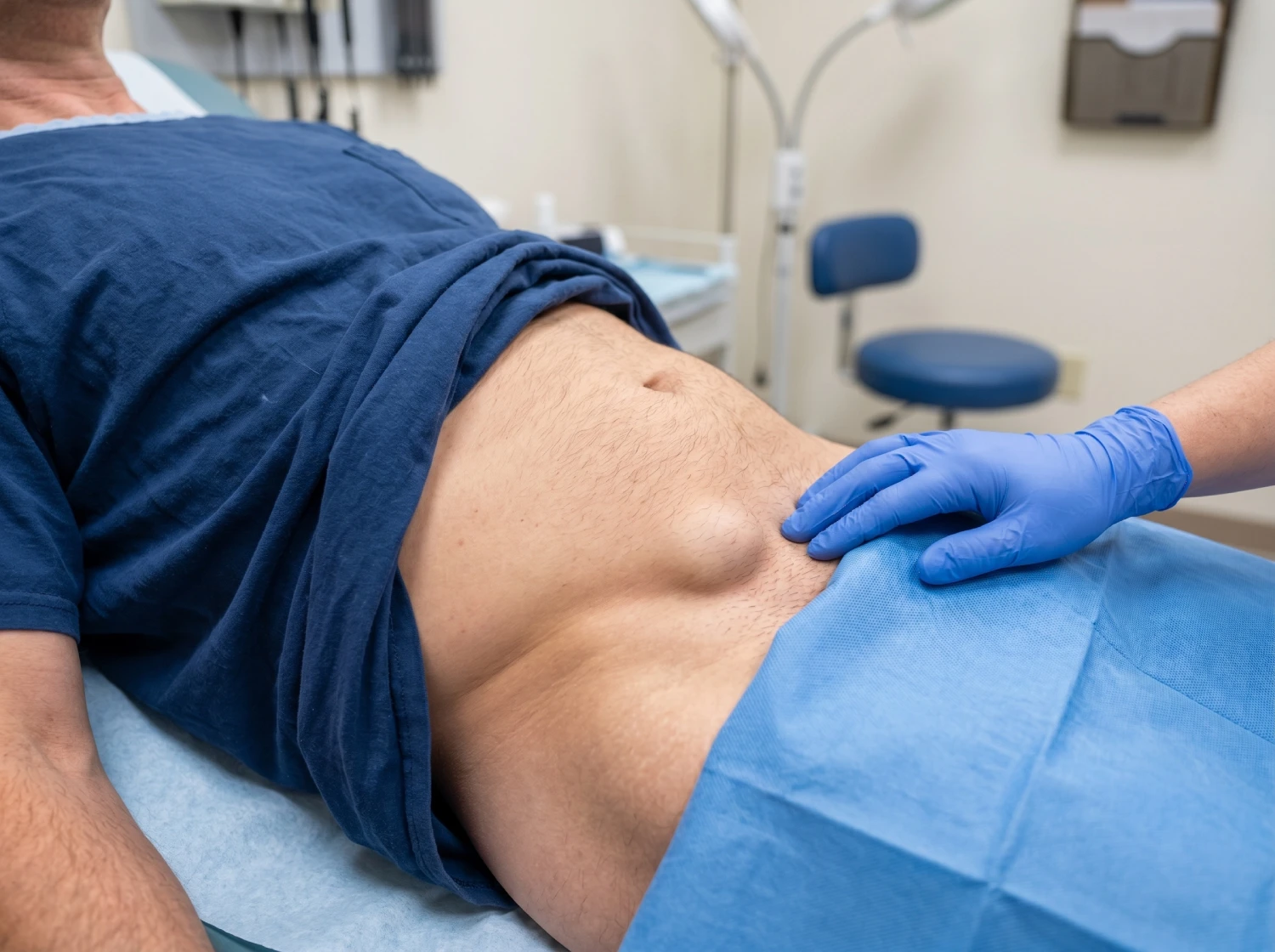
Femoral hernias are less common but disproportionately affect women, particularly those who are older or have had multiple pregnancies. They occur through the femoral canal, a narrower anatomical space just below the inguinal ligament.
- A smaller, sometimes less obvious bulge lower in the groin crease, below where an inguinal hernia typically appears.
- Symptoms that can be subtle or intermittent, occasionally mistaken for a swollen lymph node.
- A higher likelihood of presenting suddenly with pain, nausea, or vomiting if the hernia becomes trapped (incarcerated).
- Because the femoral canal is narrow and rigid, these hernias carry a notably higher risk of strangulation compared to inguinal hernias, even at a smaller size.
Key Differences at a Glance
The most clinically important distinction isn’t the discomfort level – it’s the risk profile. Inguinal hernias are more common but generally lower risk if monitored appropriately. Femoral hernias are less common but carry a meaningfully higher risk of strangulation, which is why many surgeons recommend earlier surgical repair for femoral hernias even when symptoms are mild or the hernia is small.
Technique matters as much as timing. The trade-offs of laparoscopic vs open inguinal hernia repair depend on the hernia itself, your general health, and whether both sides are involved, and within the minimally invasive options the choice of TEP vs TAPP groin hernia surgery comes down to anatomy and any previous abdominal surgery.
When Groin Hernia Symptoms Are an Emergency
Seek urgent medical attention if a groin bulge becomes suddenly painful, red, firm, or impossible to push back in, especially if accompanied by nausea, vomiting, or fever. These are signs of possible incarceration or strangulation – a surgical emergency requiring immediate assessment, regardless of hernia type.
Frequently Asked Questions
How can I tell if my groin hernia is inguinal or femoral?
Position and patient factors are useful clues – inguinal hernias sit higher and are more common in men, while femoral hernias sit lower in the groin crease and are more common in women. A clinical examination or ultrasound gives a definitive answer.
Are femoral hernias more dangerous than inguinal hernias?
Femoral hernias carry a higher relative risk of strangulation due to the narrow, rigid canal they pass through, even though they are less common overall and often smaller.
Can a groin hernia go away without surgery?
No, hernias do not heal or resolve on their own. Surgery is the only definitive treatment, though small, asymptomatic inguinal hernias may sometimes be monitored initially. For a fuller explanation of why waiting does not help, see can hernias heal on their own?
Why are femoral hernias more common in women?
Anatomical differences in the pelvis, along with the effects of pregnancy on the pelvic floor and connective tissue, make women more susceptible to femoral hernias than men.
What does a strangulated hernia feel like?
Sudden, severe pain at the hernia site, a bulge that becomes hard and cannot be pushed back in, along with nausea, vomiting, or fever, are all signs requiring emergency care.
Book Your Consultation Today!
Noticed a bulge or discomfort in your groin? Don’t ignore the early signs. Book your consultation with Dr. Sherif Awad for prompt assessment and peace of mind.
Don't wait for symptoms to worsen. Book your consultation with Dr Sherif Awad!
Medical Disclaimer
This content is for general informational purposes and does not replace personalised medical advice. Readers should consult Dr Sherif Awad or another qualified specialist for diagnosis and treatment tailored to their individual condition. For a personalised assessment, call +971 50 181 9783 or book a consultation with Dr Sherif Awad.
About Dr Sherif Awad
Dr Sherif Awad is a leading experienced Consultant General, Laparoscopic, Upper Gastrointestinal and Weight Loss Surgeon based at Emirates Speciality Hospital (Healthcare City).